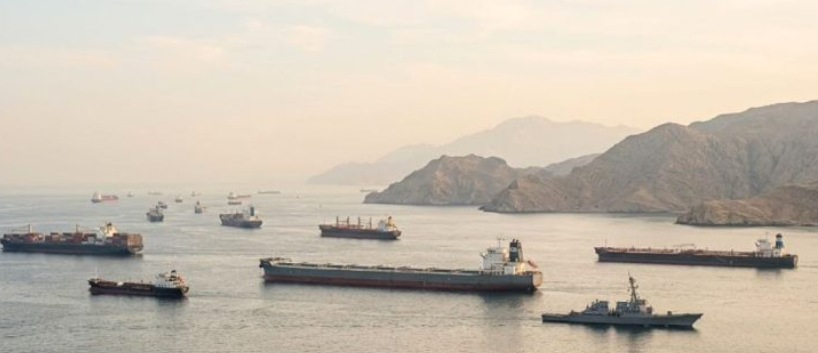
In a major shift of regional strategy, the United Arab Emirates has reportedly signaled its willingness to participate in a military operation alongside the United States and other global allies to forcefully reopen the Strait of Hormuz. According to recent high-level reports, Emirati officials have been actively lobbying for an international coalition—ideally backed by a United Nations Security Council resolution—to break the Iranian “chokehold” on the world’s most vital maritime oil artery. This move would mark a historic turning point, potentially making the UAE the first Persian Gulf nation to transition from a mediator to a direct combatant in the ongoing conflict with Tehran. The change in stance follows a series of provocative Iranian strikes on civilian infrastructure, including hotels and airports in Dubai, which have convinced Abu Dhabi that the current regime is no longer acting within a predictable logic and must be met with collective force.
The proposed involvement of the UAE is not merely symbolic; the nation is reviewing a range of tactical roles, from demining operations and escorting commercial tankers to more active military engagements. Emirati diplomats have reached out to powers across Europe and Asia, arguing that the security of the Strait is a global economic necessity that requires a unified response. Furthermore, reports indicate that the UAE has suggested the U.S. should consider establishing control over strategic islands in the waterway, including Abu Musa—a territory that has been held by Iran for over fifty years but is claimed by the Emirates. By aligning itself with President Donald Trump’s “Operation Epic Fury” and his calls for regional allies to shoulder more of the security burden, the UAE is positioning itself as a central pillar of a new Middle Eastern defense architecture aimed at neutralizing Iranian threats to global trade.
As the conflict enters its fifth week, the stakes for the global economy have reached a critical juncture, with the Strait of Hormuz typically carrying roughly 20% of the world’s oil and liquefied natural gas supply. While the waterway is currently operating under a “constrained and controlled” environment—where Iran dictates which vessels may pass based on political alignment—the UAE’s potential entry into the fray could significantly alter the military balance. Analysts suggest that the Emirates’ advanced air force and strategic deep-water ports, such as Jebel Ali, would provide the U.S.-led coalition with essential operational advantages. However, the decision carries immense risks, as Tehran has already threatened retaliatory strikes against any Gulf nation that assists in what it deems “foreign aggression,” raising fears that Dubai and Abu Dhabi could become central targets in a wider regional conflagration.
Despite the aggressive posturing, diplomatic efforts have not entirely ceased, though they are increasingly overshadowed by military preparations. The UAE is currently pushing for a UN resolution that would provide a legal framework for the use of force, hoping to draw in hesitant partners from Asia and Europe who are wary of acting without international legitimacy. At the same time, the White House has signaled that while it welcomes the UAE’s support, it is prepared to move forward with its own timeline for ending the war, with or without a formal deal from Tehran. As the world awaits an official update from Washington, the UAE’s readiness to “join the fight” serves as a stark reminder that the battle for control over the world’s energy lanes has entered a dangerous and unpredictable new phase, where the lines between regional defense and global warfare are rapidly blurring.