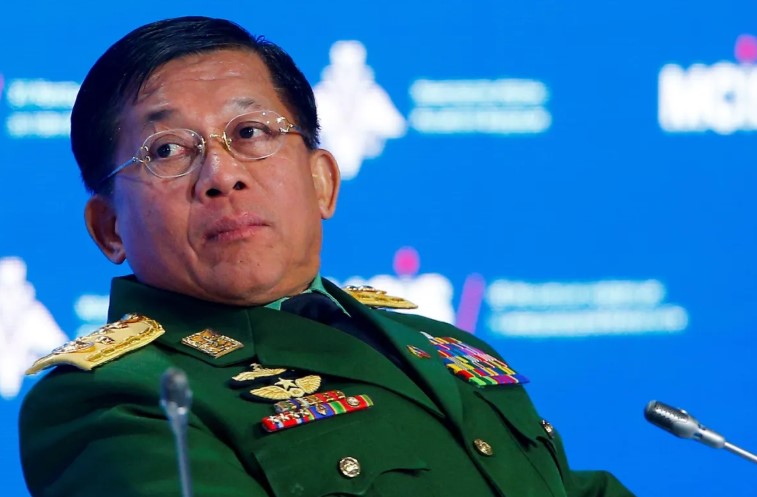
In a move that has drawn widespread international condemnation and deepened the political crisis in Southeast Asia, Myanmar’s military leader, Senior General Min Aung Hlaing, has officially assumed the role of President. This transition from a “transitional” military council head to the formal presidency marks a significant consolidation of power for the man who orchestrated the February 2021 coup, which dismantled the country’s brief democratic experiment. By appointing himself as the head of state, the General is attempting to provide a veneer of constitutional legitimacy to a regime that has been increasingly isolated on the global stage. However, political analysts argue that this formal title change does little to mask the reality of his rule, which has been defined by a brutal and protracted civil war that has displaced millions and devastated the nation’s economy.
Since the coup, Myanmar has been spiraling into a state of near-total collapse as the military junta faces unprecedented resistance from a coalition of ethnic armed organizations and the People’s Defence Forces (PDF). The takeover of the presidency by Min Aung Hlaing comes at a time when the military has suffered significant territorial losses in border regions, particularly in Shan and Rakhine states. Despite these setbacks, the newly minted President has signaled no intention of pursuing a peaceful resolution, instead doubling down on “total war” against dissenters. Human rights organizations have documented a sharp rise in airstrikes on civilian areas and the systemic suppression of political opponents since the General’s latest power grab. As he takes the oath of office, the prospects for a return to civilian rule appear more distant than ever, with the international community struggling to find effective leverage to halt the ongoing bloodshed.
The move is also seen as a strategic preparation for the junta’s proposed “general elections,” which have been repeatedly delayed and are widely dismissed as a sham by the opposition. By holding the presidency, Min Aung Hlaing ensures total control over the electoral commission and the legal apparatus required to validate a future military-backed government. While the junta’s regional allies and a few neighboring nations maintain a cautious diplomatic engagement, the United Nations and Western powers have reiterated that they do not recognize the legitimacy of the military’s self-appointed leadership. For the people of Myanmar, this formalization of the General’s presidency is a grim confirmation that the military intends to hold onto power indefinitely, even as the country remains fractured by a war that shows no signs of ending.