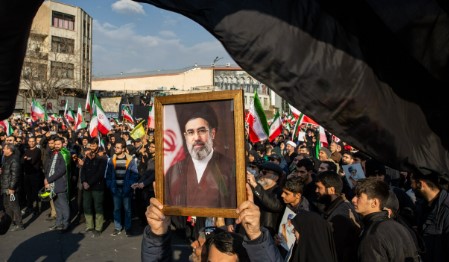
In a move that highlights the ongoing psychological and information warfare between Washington and Tehran, Iran’s newly appointed Supreme Leader, Mojtaba Khamenei, has issued a fresh written message just days after U.S. President Donald Trump cast doubt on his survival. During a recent media briefing, Trump asserted that the United States had not heard directly from the “son” and suggested he was “either dead or in very bad shape,” citing a lack of recent public appearances as evidence of a leadership vacuum. In an apparent effort to quell these rumors and project continuity, Iranian state media released a statement attributed to Mojtaba Khamenei, in which he expressed deep gratitude to the people and religious leadership of Iraq for their “clear stance against aggression.” This latest communication, though still delivered in text rather than via video or audio, appears strategically timed to counter the American narrative that the Iranian high command has been “decapitated” or left incapacitated following the initial wave of high-intensity strikes.
The mystery surrounding Mojtaba’s physical condition has become a central theme of the month-long conflict, with intelligence agencies from the CIA to Mossad reportedly scrambling for proof of life. While Iranian officials insist the Supreme Leader is in “full health” and merely operating from secure locations for tactical reasons, the persistent absence of a live broadcast has fueled intense speculation. Analysts suggest that the reliance on written decrees—which have recently included the appointment of military advisers and Nowruz greetings—indicates a leadership that is functional but perhaps physically compromised or extremely cautious of electronic surveillance. Trump’s rhetoric, which includes calling the appointment of Mojtaba a “big mistake” and claiming a “regime change” has already effectively occurred, is seen by many as a deliberate attempt to sow internal discord and encourage a popular uprising within Iran.
As the “Ballroom Project” continues beneath the White House and the conflict expands to include Houthi drone strikes and the closure of the Strait of Hormuz, the battle for the narrative has become as critical as the kinetic war on the ground. The Iranian leadership’s decision to maintain Mojtaba’s “unseen” status while issuing defiant messages suggests a strategy of “leadership from the shadows,” aimed at protecting the third Supreme Leader from the same fate as his father, the late Ayatollah Ali Khamenei. However, as President Trump continues to question the legitimacy and even the existence of the new leader, the pressure on Tehran to provide a verified visual appearance remains immense. For now, the “loud silence” from Tehran’s studios combined with the frequent text-based “fresh messages” leaves the world watching a high-stakes game of geopolitical chess where the king’s presence is felt, but his face remains hidden from view.