
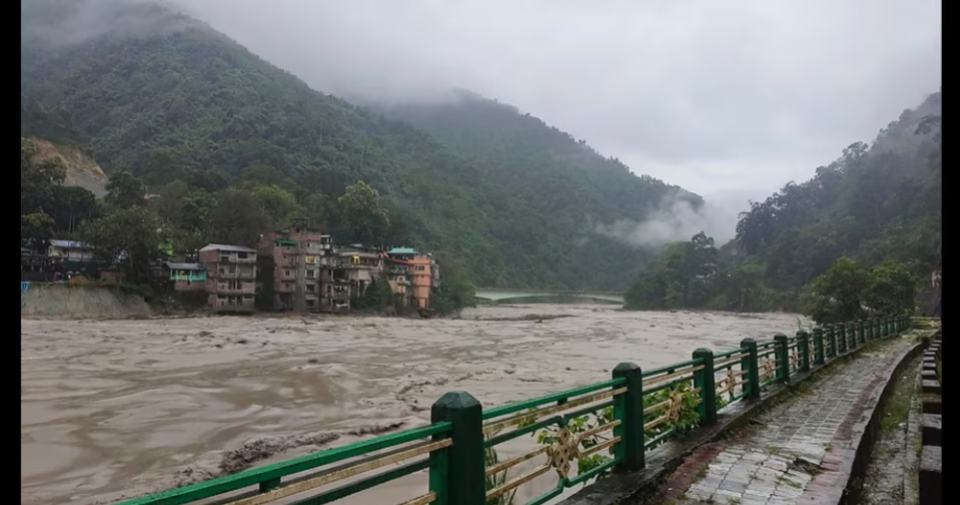
Sikkim’s recent inclusion into the Brahmaputra River Board has ignited a intense debate regarding the future of the ecologically sensitive Teesta River. While the Sikkim state government views this 44-year-awaited membership as a strategic opportunity to secure crucial central funds for flood control, local activists and opposition groups fear it will pave the way for aggressive hydropower expansion.
State Water Resources Minister Sonam Lama announced that Sikkim officially joined the board on May 8. He confirmed that the state has already requested ₹289 crore to fund vital infrastructure, including drainage channels and protective river walls. Minister Lama expressed optimism that the Union Ministry and northeastern states would support this financial bid to safeguard Sikkim’s citizens as the state celebrates 50 years of statehood.
However, environmentalists, led by Teesta river activist Gyatso Lepcha, have raised serious red flags. They argue that the Brahmaputra Board has historically pushed for mega-dam projects in states like Manipur and Tripura, raising fears that stalled initiatives like the Teesta Stage IV project could be revived.
Activists emphasize that the Teesta has unique ecological and geographical characteristics that cannot be managed under the same framework as the Brahmaputra. Furthermore, because the Teesta is a transboundary river flowing through West Bengal and into Bangladesh, any further hydropower intervention in Sikkim could trigger severe downstream ecological and geopolitical consequences.