
The Gauhati High Court has directed the Assam government to pay Rs 2 lakh as interim compensation to Mumtaz Begum, a Bengali-origin Muslim woman who was allegedly expelled to Bangladesh without being given an opportunity to challenge a Foreigners Tribunal order declaring her a foreign national.
The ruling is significant as it is reportedly the first instance of a court imposing a financial cost on the state for removing a person to Bangladesh in violation of the prescribed deportation procedure.
Begum’s family came to know that she had been taken out of India only after approaching the Gauhati High Court with a habeas corpus petition. The court subsequently impleaded the Ministry of External Affairs and indicated that it would ask the ministry to make efforts to locate Begum in Bangladesh and facilitate her return to India.
A division bench comprising Justice Kalyan Rai Surana and Justice Susmita Phukan Khaund also strongly criticised the Nagaon Foreigners Tribunal for the manner in which it dealt with Begum’s case. The court observed that, based on the action taken by the tribunal, “the element of malice in law” appeared to be evident from the record.
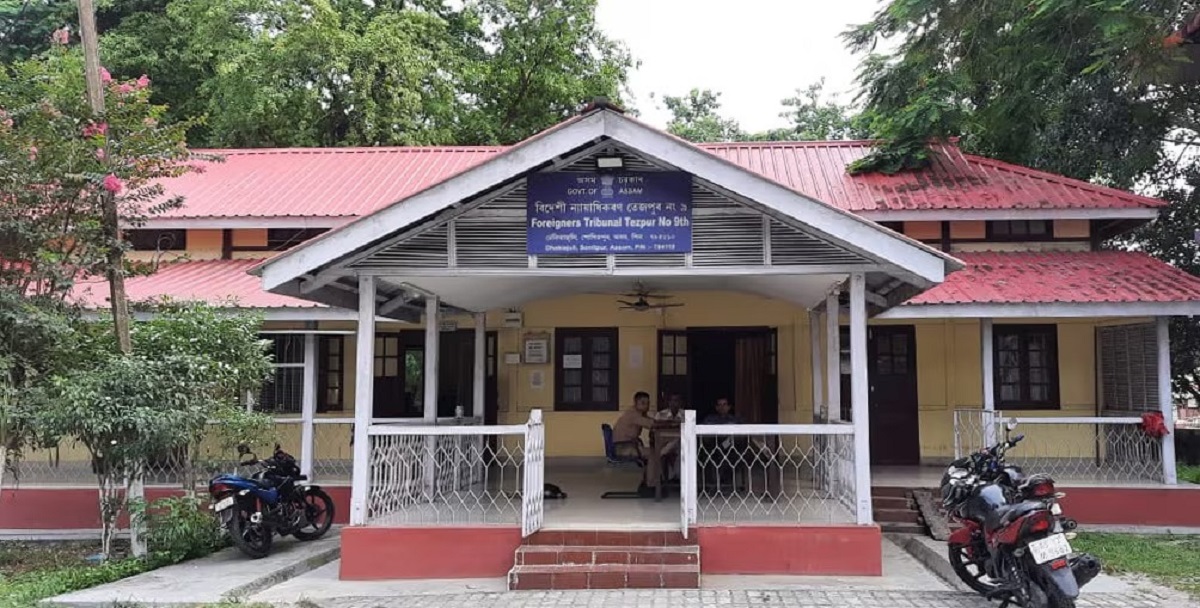
Foreigners Tribunals are quasi-judicial bodies operating in Assam that determine citizenship and nationality disputes primarily on the basis of documentary evidence.
Begum was declared a “D” or doubtful voter in 1997 during a revision of electoral rolls in Assam. She was subsequently referred to a Foreigners Tribunal by the state’s Border Police.
Her legal battle continued for years. In 2017, the Nagaon Foreigners Tribunal ruled that Begum was not an Indian citizen. She challenged the decision before the Gauhati High Court, which directed the tribunal to reconsider the matter.
The tribunal subsequently declared her a foreigner in 2019, claiming that she had failed to establish that she was the daughter of the person she identified as her father.
Begum challenged the decision again. The Gauhati High Court found that the tribunal had failed to properly examine all the documents and evidence submitted by her and directed it to reconsider the case.
On May 30, Begum appeared before the tribunal pursuant to the High Court’s directions. However, instead of reconsidering the evidence, the tribunal reportedly ordered her arrest. She was taken into custody within minutes of appearing before the tribunal. Her lawyers alleged that she was not even provided with a copy of the order, depriving her of an opportunity to challenge it before a higher court.
The High Court also questioned the circumstances surrounding Begum’s arrest. Her family claimed that she appeared before the tribunal at around 12:30 pm on May 30 and was arrested roughly 30 minutes later. The tribunal judge, Bipul Kumar Nath, disputed this version.
The Nagaon Superintendent of Police told the court that Border Police personnel arrested Begum near the tribunal premises at around 2 pm. However, the High Court questioned both accounts. It observed that if Begum had been informed, even verbally, that she had been declared a foreigner, there would have been little reason for her to remain in or around the tribunal premises between 1:30 pm and 2 pm.
The court concluded that the tribunal judge had “deliberately and wilfully delayed” issuing the order, allegedly enabling Begum to be arrested, transferred from Nagaon to the Matia detention centre and subsequently expelled from India.
The bench held that the state machinery had acted together in a manner that prevented Begum from exhausting her legal remedy and approaching the High Court to challenge the tribunal’s decision.
The court noted that Begum had been expelled from India without her family being informed about her detention. It therefore directed the Assam government to pay Rs 2 lakh to the petitioner as interim compensation.
The bench also referred to a Supreme Court ruling recognising the fundamental importance of an individual’s right to life and personal liberty. It emphasised that Article 21 of the Indian Constitution protects the life and personal liberty of not only Indian citizens but also foreign nationals.
The High Court further directed the Superintendent of Police in every district of Assam to ensure that anyone declared a foreign national by a Foreigners Tribunal is informed of the tribunal’s decision before being taken into custody.
The court also ordered that an adult member of the declared foreign national’s family should be informed before the person is moved outside the jurisdiction of the district police.
The ruling comes amid continued scrutiny of Assam’s citizenship determination process. Critics have frequently alleged that the system places a disproportionate burden on poor and marginalised residents who struggle to produce documentary evidence of citizenship.
In recent years, the Assam government has also intensified action against people declared foreigners by tribunals, with some being detained and subsequently pushed across the international border into Bangladesh.
The High Court’s latest order has raised important questions about due process, personal liberty and the legal safeguards that must be followed before a person is detained or expelled from India.