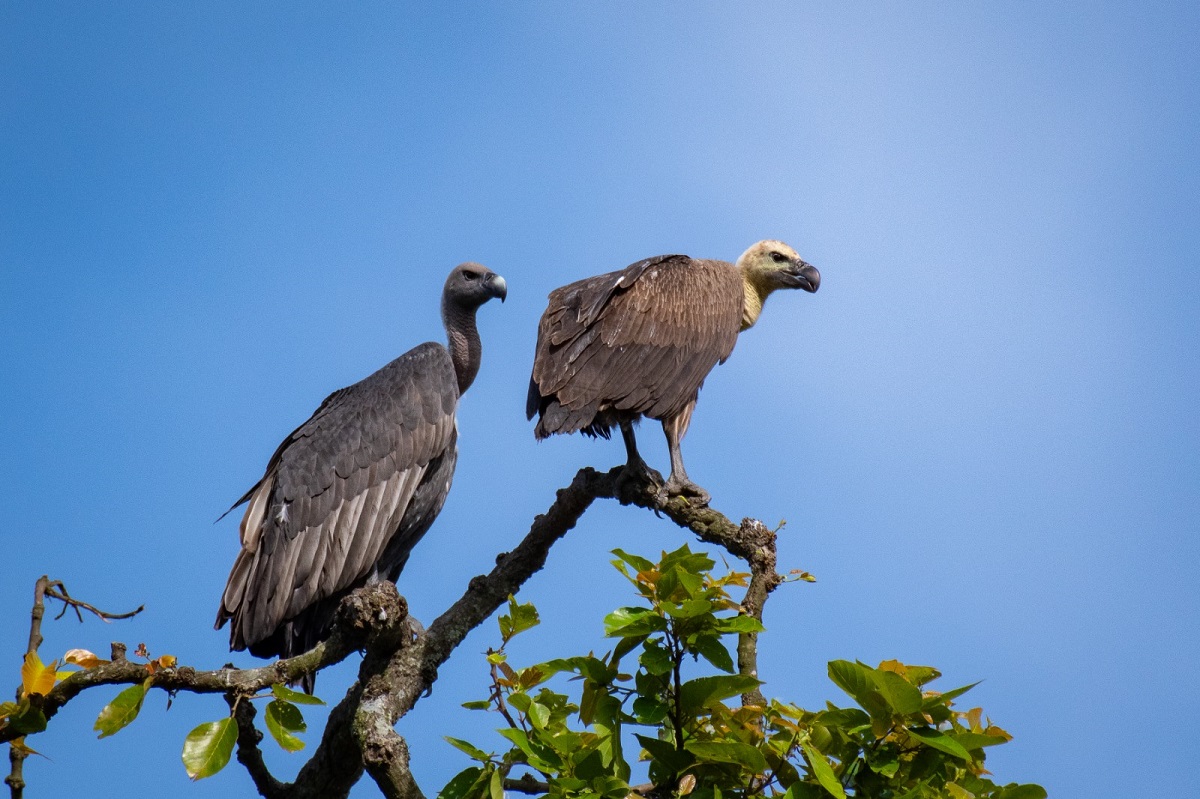
In a first – the Central Zoo Authority (CZA), a statutory body of the Ministry of Environment, Forest and Climate Change (MoEFCC), has approved the transfer of 35 captive reared critically-endangered vultures from the vulture conservation and breeding centre at Rani in Guwahati to the Kaziranga National Park under Bishwanath Wildlife Division.
Among the species to be transferred to the Sixth addition of Kaziranga National Park are 30 White-rumped Vultures (Gyps bengalensis) and five Slender-billed Vultures (Gyps tenuirostris) Both the slender-billed vultures and white-rumped vultures are classified as Critically Endangered on the IUCN Red List. They are also protected under Schedule I of India’s Wildlife Protection Act, 1972, offering the highest level of legal safeguards.
Assam serves as the primary stronghold for slender-billed vultures in India, hosting breeding populations, particularly near Kaziranga National Park, though their numbers may be on a decline due to threats like poisoning from pesticide-laced cattle carcasses. White-rumped vultures are present across the state but face similar population crashes, prompting active conservation at sites like the Vulture Conservation Breeding Centre in Rani, Kamrup, which holds a sizable number of captive individuals. “The Sixth addition to Kaziranga National Park as administered by Bishwanath Wildlife Division was selected as the release site owing to its expansive forested landscapes, abundant carrion resources from large herbivores within Kaziranga’s extended buffer. Ongoing anti-poaching measures and vulture-friendly veterinary practices further enhance its suitability for soft releases, promoting natural foraging and nesting behaviour,” an official statement issued on Wednesday, said.
A release aviary has been constructed by the Kaziranga Park Authority with technical supervision of Bombay Natural History Society near the Tewaripal forest camp from which the vultures would be released to the wild in the coming months in accordance with the scientific soft release protocol.
Taking to social media, Assam Chief Minister Himanta Biswa Sarma posted, “Happy to inform you that 30 white rumped vultures and 5 slender-billed will be released from Rani’s Vultures Conservation Breeding Centre at the Sixth addition of Kaziranga National Park as a unique step towards conservation of our nature and living things.”
The Chief Minister emphasised the significant role of the bird in conserving the environmental balance. “This initiative will once again prove our role in wildlife conservation. Hearty appreciation to each and every person behind this great work,” Sarma stated. Vulture population in India, including species like white-rumped, slender-billed, and Indian vultures, has declined considerably over the years. Official said that by the year 2007, the population of white-rumped vultures dropped to around 11,000 and slender-billed at about 1,000, marking the fastest decline ever recorded for any bird species. Recent estimates from 2023–2025 indicate lingering low numbers, such as 750–1,000 slender-billed vultures, with declines slowing but no significant recovery.