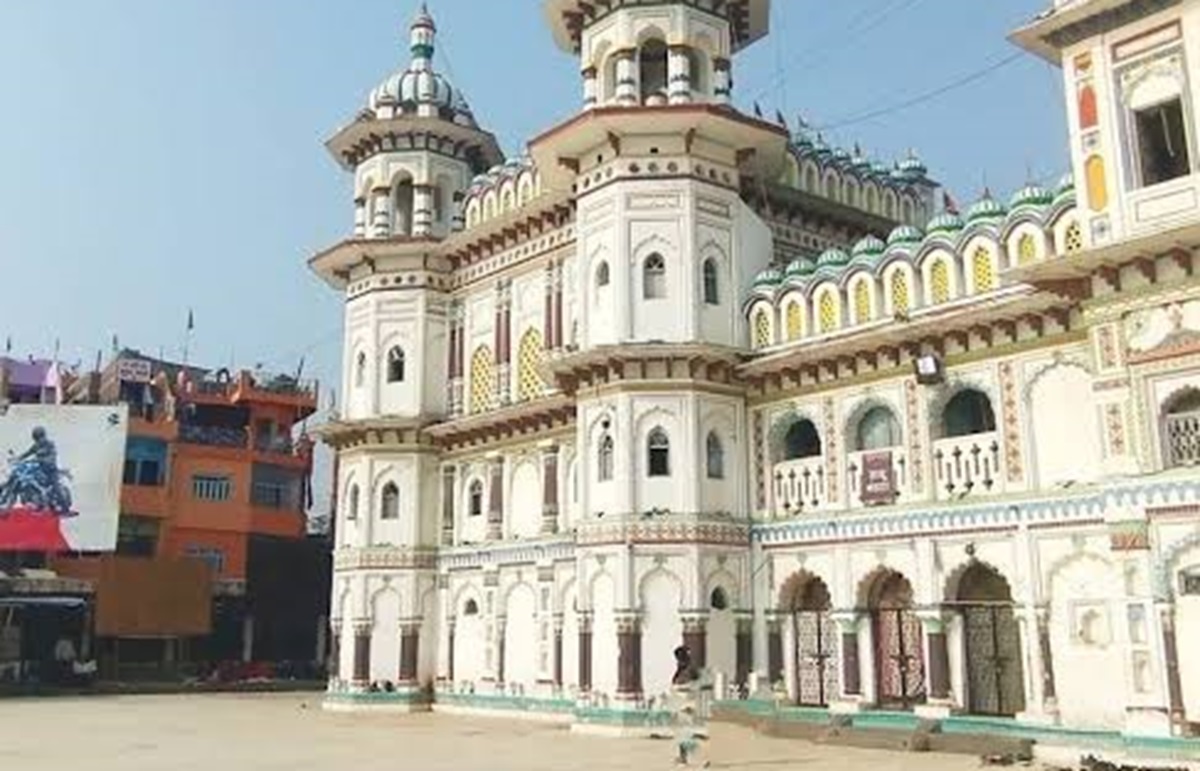
Bound together by the Ramayana as the birthplace of Lord Ram and the traditional home where Goddess Sita was born and raised, Ayodhya and Janakpur are now linked by a direct train service following the November 23 virtual flag-off of the Saryu-Kamala Express by Prime Minister Narendra Modi and Nepal’s Prime Minister Balen Shah. With weekly passenger operations starting November 28 to cover 604 kilometres in roughly 19 hours, travellers can journey straight from Ayodhya to Janakpur without changing trains and discover everything the Nepalese city offers beyond its association with Sita. Roughly 225 kilometres southeast of Kathmandu, Janakpur—also called Janakpurdham—is the capital of Madhesh Province, an important Hindu pilgrimage destination, and a hub of Maithili culture that takes its name from King Janaka, the legendary ruler of ancient Mithila’s Videha kingdom and Sita’s father in Hindu tradition. Although its Ramayana heritage attracts legions of pilgrims, particularly from India, historical records tell a slightly different story, with the earliest documented mention of Janakpur as a pilgrimage site appearing in 1805 and no archaeological evidence proving it was ancient Videha’s capital; up until the 1950s, it consisted mainly of rural settlements of farmers, artisans, priests, and monastery workers before developing into a commercial centre and becoming Dhanusa District’s capital in the 1960s. The city’s defining landmark is Janaki Mandir, one of Nepal’s largest temples dedicated to Sita, which was constructed in 1898 by Queen Brisabhanu Kunwari of Tikamgarh, earned the name Nau Lakha Mandir due to its reputed nine-lakh-gold-coin cost, and houses a flower-covered statue of Sita believed to have surfaced in the Sarayu River near Ayodhya alongside statues of Lord Ram and his brothers Lakshman, Bharat, and Satrughna. Steps away from Janaki Mandir stands the Ram Sita Vivaha Mandir, commonly called Vivah Mandap, a shrine honouring Ram and Sita’s marriage in Mithila where a ceremonial re-enactment takes place annually during Vivaha Panchami in November or early December. Equally compelling is Janakpur’s status as a centre of Mithila art, featuring traditional paintings by women on pottery, walls, and courtyards that reflect the enduring cultural ties between India and Nepal across a historical Mithila region that was divided into northern Nepal and southern India by the 1816 Sugauli Treaty with the British East India Company, yet remained united through the Maithili language and painting traditions. Positioned about 23 kilometres from the Indian border at Bhitthamore and already connected to Jainagar in Bihar via Nepal Railways, Janakpur now welcomes direct rail travellers from Ayodhya through the new Saryu-Kamala Express
Travellers Have Plenty to Be Excited About as a Direct Train Now Reaches Nepal’s Janakpur