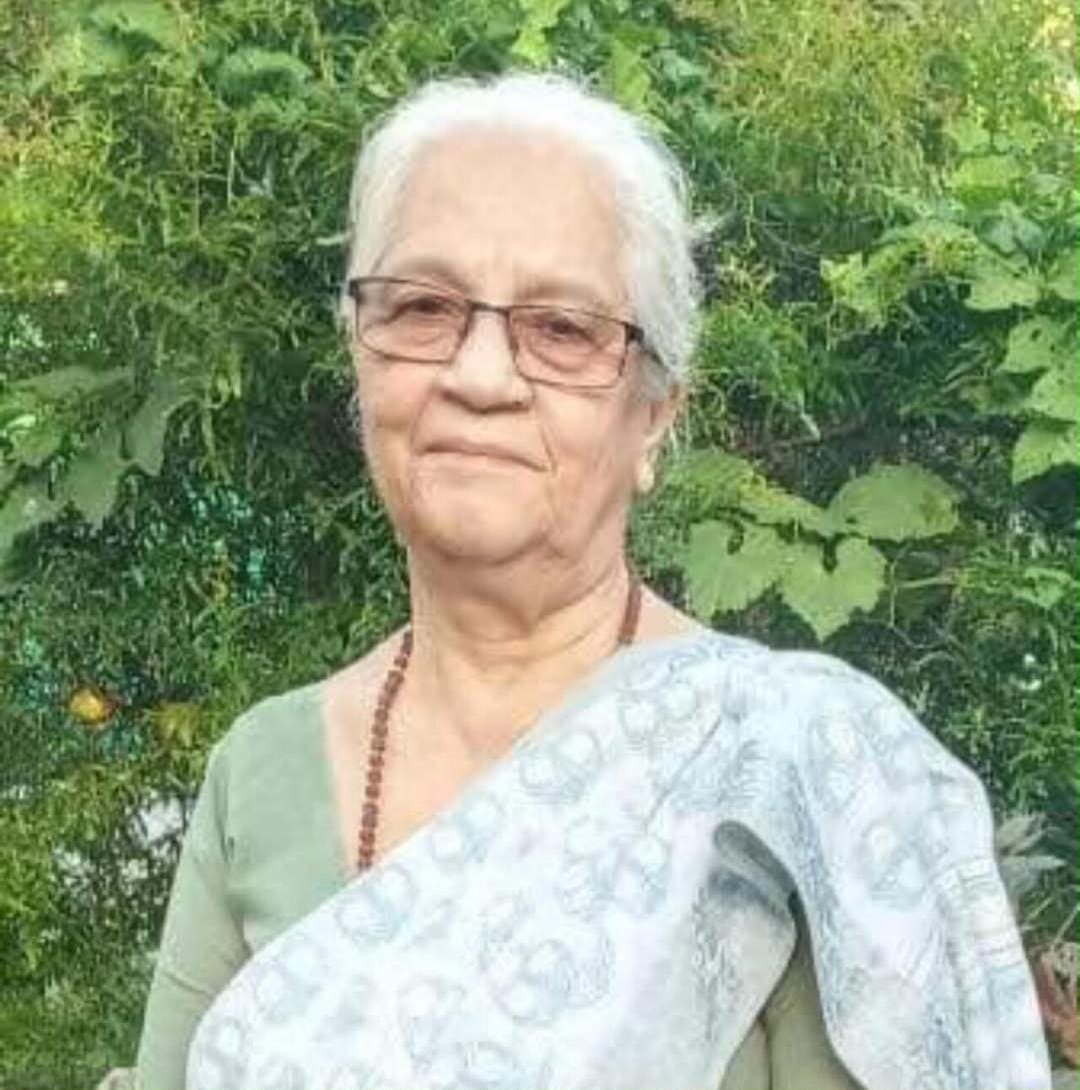
Padma Shri awardee, Sahitya Akademi Award-winning author, educationist, translator and Founder President of the Bharatiya Gorkha Parisangh, Gita Upadhyay, passed away on Monday night at the age of 87 following prolonged age-related ailments. She breathed her last at 9:10 pm on July 13, coinciding with the observance of Bhanu Jayanti.
Her passing marks the end of a remarkable chapter in Indian Gorkha literature, education and community leadership. Widely regarded as one of the most influential literary figures of the Indian Gorkha community, Upadhyay devoted her life to literature, education, translation and social service, leaving behind a lasting legacy.
Expressing grief over her demise, Bharatiya Gorkha Parisangh (BGP), Assam State Committee General Secretary Nanda Kirati Dewan described her as the guiding force behind the establishment of the organisation. He said her visionary leadership and lifelong commitment to safeguarding the identity, dignity, unity and constitutional rights of the Indian Gorkha community would continue to inspire future generations.
As a mark of respect, the Bharatiya Gorkha Parisangh, Assam State Committee, has declared a week-long mourning period beginning July 14. Members and office-bearers across the state have been requested to observe the mourning and pay tribute to the departed leader.
Born on February 14, 1939, at Gangmouthan in the then Darrang district, now Biswanath district of Assam, Gita Upadhyay belonged to a family known for its contributions to public life. She was the granddaughter of freedom fighter and social reformer Chabilal Upadhyaya and daughter of Tankanath Upadhyaya. Her brother Swarup Upadhyaya served as a Member of Parliament from the Tezpur Lok Sabha constituency, while another brother, the late Justice Arun Chandra Upadhyaya, was a judge of the Gauhati High Court.
She graduated from Handique Girls’ College in Guwahati before becoming the first Gorkha woman from Assam to earn a postgraduate degree in Political Science, a milestone that inspired many women from the community to pursue higher education.
A respected educator and prolific writer, Upadhyay made significant contributions to Nepali and Assamese literature. She believed literature could bridge cultures and communities, and her translations played a key role in strengthening literary ties between Assamese and Nepali readers. Among her notable works are the translations of The Diary of Anne Frank into Nepali and Assamese, the novel Janmabhumi Mero Swadesh, and her autobiography Jiwanlai Pharkera Herda.
She received the Sahitya Akademi Award in 2016 for her contribution to literature, while the Government of India honoured her with the Padma Shri in 2025 for her lifelong service to literature, education and society.
Beyond literature, Upadhyay was instrumental in establishing the Bharatiya Gorkha Parisangh as a national platform dedicated to protecting the rights and identity of the Indian Gorkha community. She also received the Rashtriya Gorkha Gaurav Samman during the Diphu National Council Meet.
Condoling her death, the Bharatiya Gorkha Parisangh extended its sympathies to her family and said her ideals, literary works and lifelong dedication to public service would continue to inspire generations.