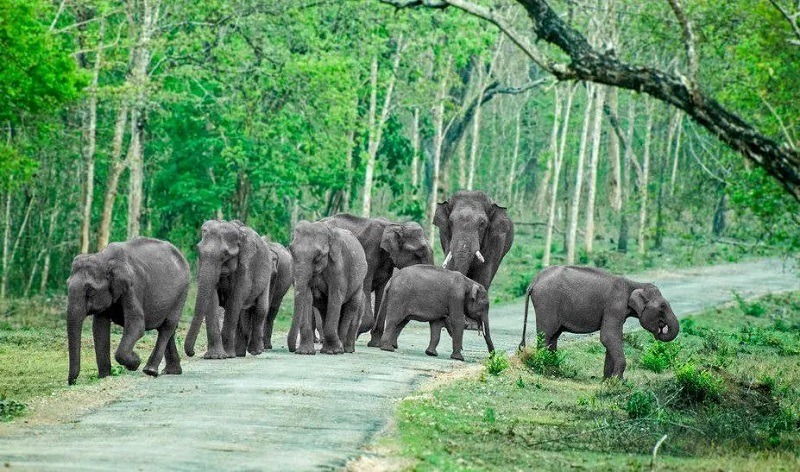
Rapid deforestation across several hill ranges in central Assam has intensified the human-elephant conflict in the region, with wild elephant herds increasingly entering croplands and residential areas in search of food and shelter. The affected areas include the undivided districts of Nagaon, Hojai, West Karbi Anglong and Karbi Anglong.
Local residents claim that hills once covered with dense forests have now turned barren due to unchecked tree felling and illegal timber operations. Villagers allege that negligence by the forest department, lack of awareness among people living near forest areas, and the involvement of certain forest officials in illegal logging activities have contributed significantly to the destruction of natural habitats.
As forests continue to disappear, elephants are facing a severe shortage of food and shelter in their traditional habitats. Consequently, large herds are descending from the hills to nearby plains, frequently entering paddy fields, tea gardens and villages. These incursions have resulted in crop damage, property destruction and growing fear among local communities.
Residents say the conflict has become more frequent in recent years, especially during the harvesting season when elephants are attracted to cultivated fields. Environmentalists and wildlife experts have stressed the urgent need for forest conservation, stricter action against illegal logging and better awareness programmes to reduce human interference in wildlife habitats.
They also emphasised that restoring degraded forests and ensuring safe wildlife corridors are essential to reducing conflict and protecting both human lives and wild elephant populations in Assam.
Forest Depletion in Assam Hills Sparks Concern Over Elephant Movement