
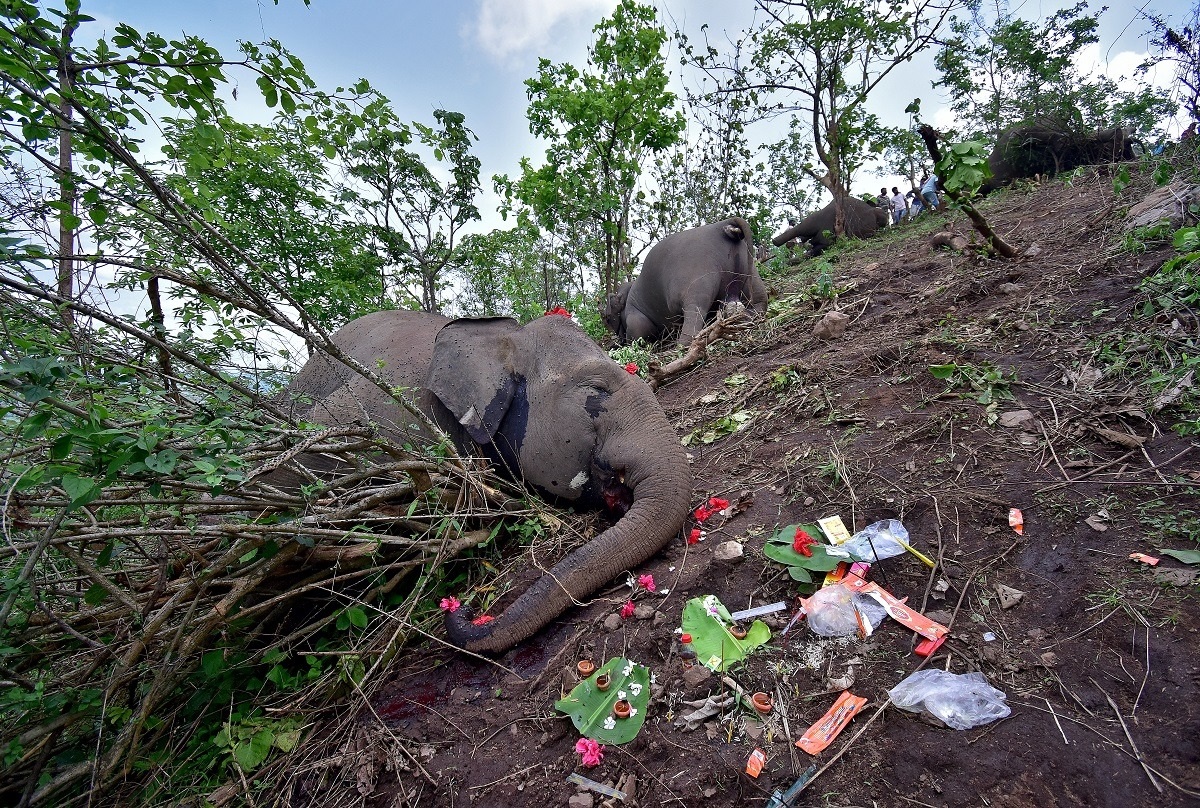
Assam has reported 356 elephant deaths caused by electrocution, train collisions, poaching and poisoning between 2009-10 and 2025-26, emerging as the second-worst affected state in the country, according to data released by the Union Environment Ministry in response to a Right to Information (RTI) query.
Odisha recorded the highest number of such fatalities at 371, while Assam followed with 356 deaths. Karnataka ranked third with 223 cases.
Nationwide, a total of 1,765 elephant deaths were attributed to the four causes during the period. Electrocution emerged as the leading cause, accounting for 1,185 deaths, or nearly 67 per cent of the total. Train collisions claimed 277 elephants, poaching accounted for 222 deaths, and poisoning was responsible for 81 fatalities.
The data also points to a worrying rise in elephant deaths caused by electrocution across the country. From 267 fatalities recorded between 2009-10 and 2013-15, the number increased to 441 during 2021-22 to 2025-26, registering a rise of nearly 65 per cent.
In Assam, electrocution claimed 191 elephants, placing the state third nationally behind Odisha, which reported 238 deaths, and Karnataka with 195.
Train collisions have emerged as another major threat to elephants in Assam. With 90 recorded fatalities, the state topped the national list, followed by West Bengal with 68 deaths.
The situation remained particularly alarming over the last three financial years covered by the data — 2022-23, 2023-24 and 2024-25 — when Assam alone accounted for 30 of the 44 elephant deaths reported across the country due to train accidents.
Assam also recorded the highest number of elephant deaths from poisoning. As many as 47 elephants died due to poisoning between 2009-10 and 2025-26, accounting for 58 per cent of the national total. Odisha stood a distant second with 15 such cases.
Of Assam’s 356 elephant deaths, 328 were attributed to electrocution, train collisions and poisoning. The remaining fatalities were classified under poaching, although the RTI response did not provide a separate state-wise breakdown of poaching-related deaths.
RTI activist Amit Gupta, who sought the information, stressed that electrocution and train-related fatalities should not simply be dismissed as accidental deaths.
“Electrocution is not an accident. Illegal electric fences, sagging wires and uninsulated power lines in elephant corridors amount to negligence. Train deaths are also not accidents. They reflect failures to slow down trains, build underpasses and protect elephant corridors,” Gupta said.
The findings highlight the growing threat posed by human activities to Assam’s elephant population, with electrocution, railway accidents and poisoning accounting for a substantial share of elephant mortality in the state. Assam’s second position in the national tally further underscores the urgent need for stronger preventive measures and better protection of elephant habitats and movement corridors.