In a significant initiative to strengthen sustainable livelihoods around Assam’s Manas National Park, Aaranyak organised a specialised training programme on warping drum technology and its applications in handloom weaving at Gorumara, Koklabari, under the Bhuyanpara Range of Manas National Park.
The initiative seeks to bring appropriate modern technology into traditional handloom practices, while improving productivity, product quality and income opportunities for women weavers living in the fringe areas of the landscape.
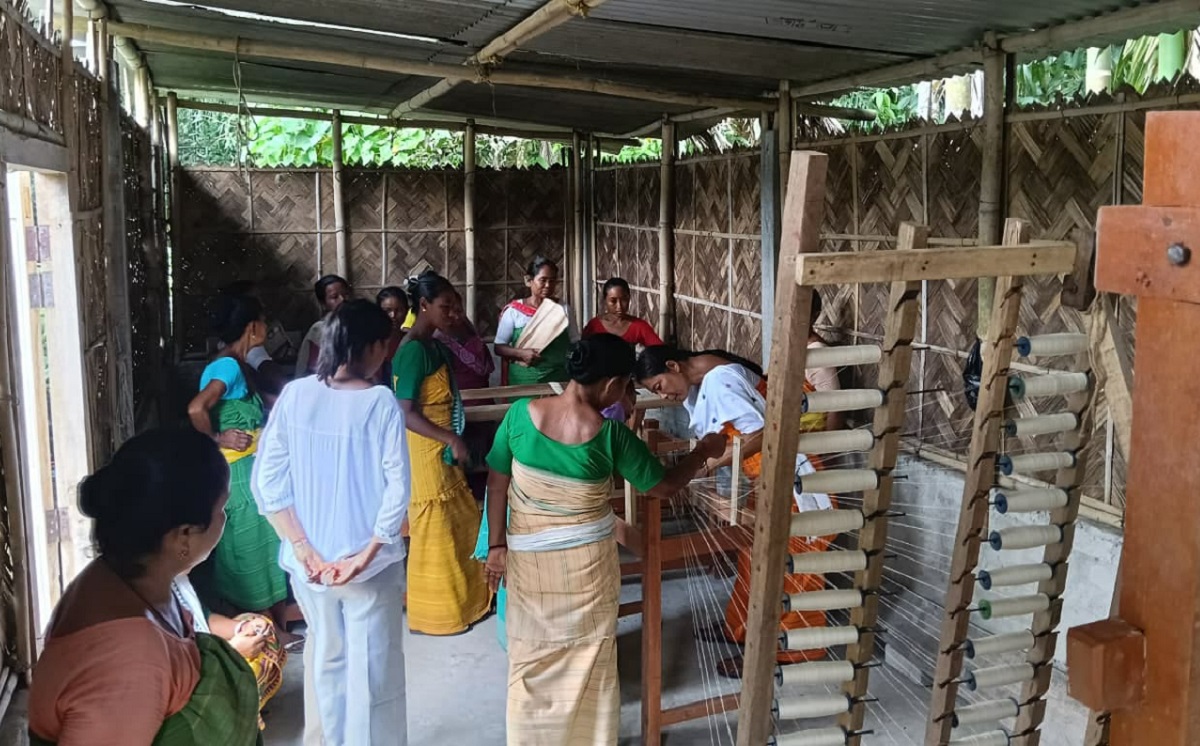
Twenty women handloom weavers from the Koklabari area participated in the training, which was designed to enhance their technical skills and reduce the physical drudgery associated with traditional weaving practices. The recently held programme focused specifically on the use of warping drums, a technology that can make the warping process more efficient, safer and less dependent on outdoor working conditions.
Warping is an essential stage of handloom weaving. Traditionally, many weavers across the landscape carry out the process along roadsides or in open spaces, which can be time-consuming, physically demanding and risky, particularly during adverse weather conditions. Through hands-on demonstrations, the participants were provided with a step-by-step understanding of the process, beginning with bobbin winding and continuing through the completion of the warping activity.
While warping drum technology is not new to the wider handloom sector, its use is relatively new among the participating weavers. The adoption of the technology is expected to reduce drudgery, save time and energy, and improve the efficiency and consistency of their work.
The training was conducted by Rekha Baro, a well-known handloom weaver and professionally qualified trainer from the region, who has extensive experience in handloom technology and its applications.
The initiative is part of Aaranyak’s broader efforts to promote alternative and sustainable livelihoods and nature-based solutions among indigenous peoples and local communities living around ecologically important landscapes.
By strengthening community-based livelihoods and enhancing the capacities of women, such interventions seek to build greater economic resilience while contributing to long-term conservation outcomes.
Women weavers participate in training session on modern warping technology in Manas National Park