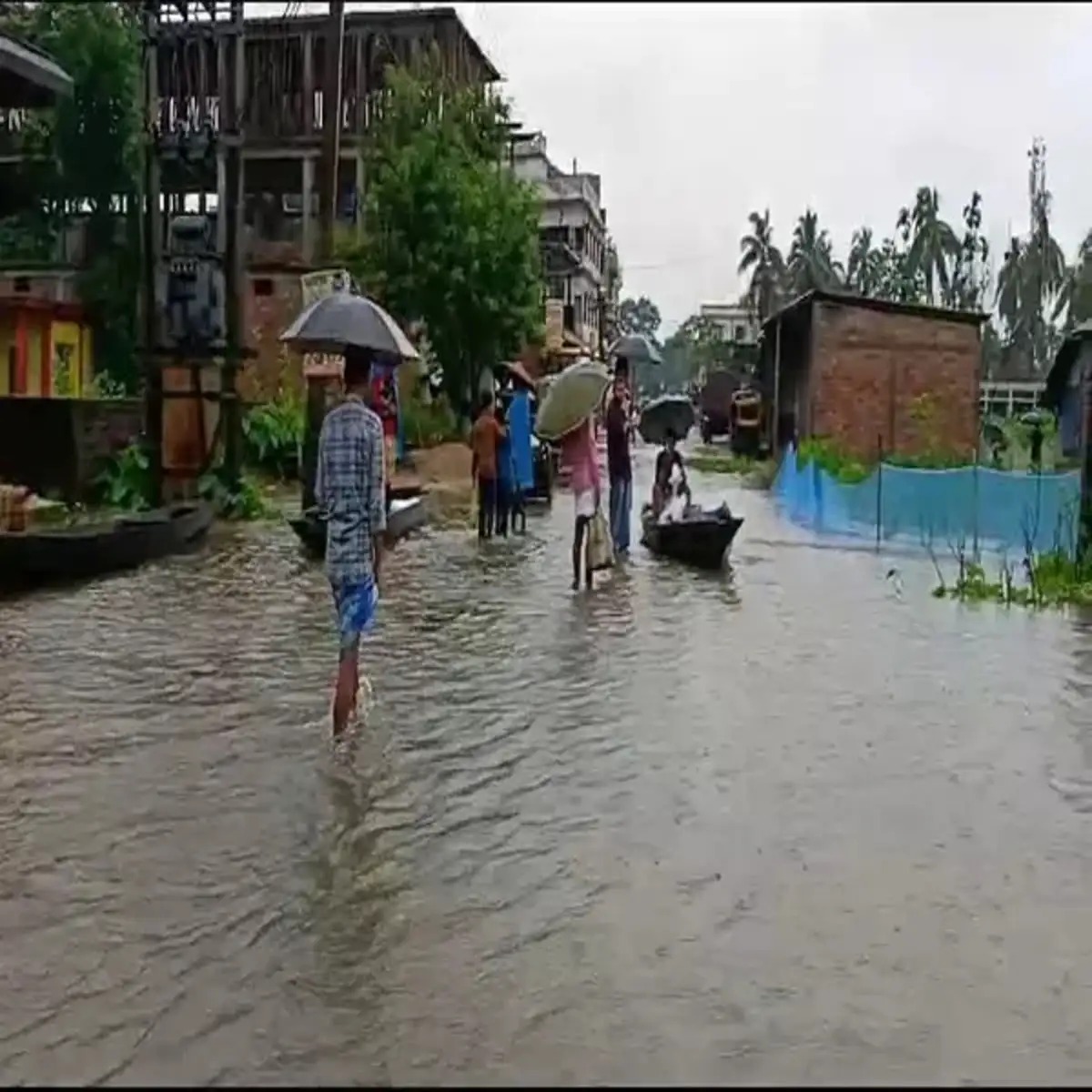
The first wave of floods has severely affected several districts of Assam, with more than 20,000 people impacted and authorities issuing a high alert across vulnerable regions. Continuous rainfall in Assam and the upper catchment areas of Arunachal Pradesh has caused rivers to swell, leading to widespread flooding, embankment breaches and disruptions to normal life.
Dhemaji district has emerged as one of the worst-hit areas, where floodwaters have affected more than 84 villages and submerged nearly 920 hectares of agricultural land. Thousands of residents are facing shortages of food, drinking water and connectivity as overflowing rivers inundate homes, roads and farmlands. Relief camps have been opened to shelter affected families.
A high alert has also been sounded in Lakhimpur following a sharp rise in the water level of the Ranganadi River after water was released from an upstream hydroelectric project. Emergency response teams, including the SDRF and NDRF, have been placed on standby across vulnerable districts.
In Bajali district, a breach in the Kaldia River embankment flooded agricultural fields, damaged roads and affected livestock, raising concerns over crop losses. Meanwhile, continuous rainfall has triggered landslides along National Highway-315A, disrupting connectivity between Assam and Arunachal Pradesh.
The Assam government has directed all district administrations to remain on maximum alert. Residents in low-lying and flood-prone areas have been advised to stay vigilant and follow official safety advisories as river levels continue to rise.