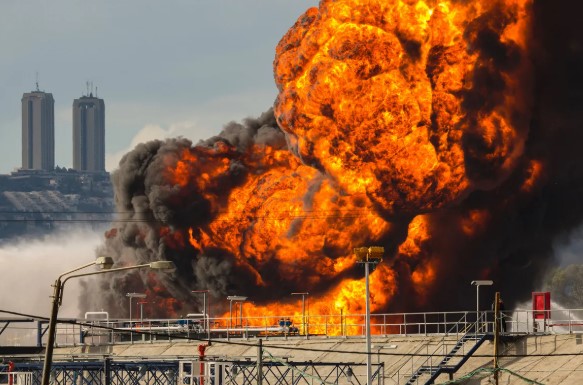
Emergency response teams in the northern Israeli city of Haifa have successfully contained a massive inferno at one of the nation’s largest oil refineries after it was struck by a high-precision missile during the early hours of Tuesday morning. The strike, which sent a towering pillar of black smoke visible from miles away, targeted a critical storage tank farm within the industrial complex, immediately triggering automated fire suppression systems and a large-scale mobilization of regional firefighting brigades. While the Israeli Defense Forces (IDF) have not yet officially named the origin of the launch, the timing of the attack coincides with the broader regional escalation involving the U.S.-Israeli coalition and Iranian-backed forces, marking a significant expansion of the conflict’s geographic footprint into vital civilian infrastructure. Local authorities confirmed that while the physical damage to the refinery’s processing units is substantial, prompt action by first responders prevented the flames from spreading to nearby chemical storage facilities, which could have resulted in a catastrophic environmental disaster for the Mediterranean coastline.
The successful containment of the fire has provided a temporary sense of relief to the residents of Haifa, though the city remains on high alert as missile defense systems continue to intercept incoming threats over the Galilee region. This latest assault on Israel’s energy heartland follows a series of reciprocal strikes across the Middle East, including the recent U.S. air campaign against Iranian nuclear sites and Tehran’s retaliatory drone strikes on tankers near Dubai. National security analysts suggest that the targeting of the Haifa refinery is a deliberate attempt to cripple Israel’s domestic fuel production and exert economic pressure on the government during a period of extreme market volatility. In the immediate aftermath of the strike, the Israeli Ministry of Energy assured the public that emergency fuel reserves remain intact and that there is no immediate threat of a nationwide shortage, despite the temporary shutdown of the Haifa facility for safety inspections and damage assessment.
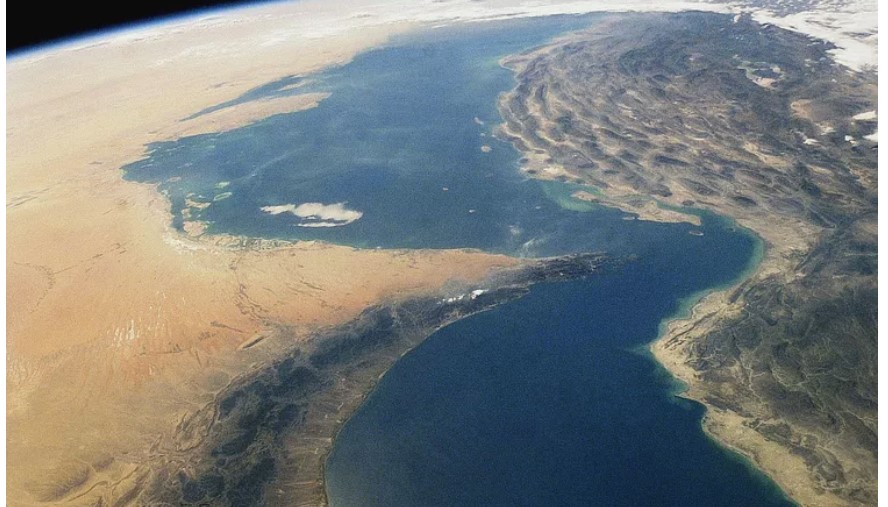
As the smoke clears over the Haifa bay, the political ramifications of the attack are beginning to unfold on the global stage. President Donald Trump, who has recently signaled a willingness to negotiate a “fast-track” peace deal, may find his diplomatic efforts complicated by this direct hit on a key ally’s industrial core. The strike serves as a stark reminder that as long as the Strait of Hormuz remains a contested “chokepoint” and regional proxies remain active, no piece of critical infrastructure in the Middle East is truly safe from the reach of modern missile technology. International energy observers are closely monitoring the situation, noting that the persistent targeting of refineries and tankers has created a “perpetual risk premium” on global oil prices that shows no signs of abating. For now, the successful dousing of the Haifa blaze has averted a secondary crisis, but the underlying embers of the regional war continue to burn, threatening to ignite a much larger conflagration if a comprehensive ceasefire is not reached shortly.