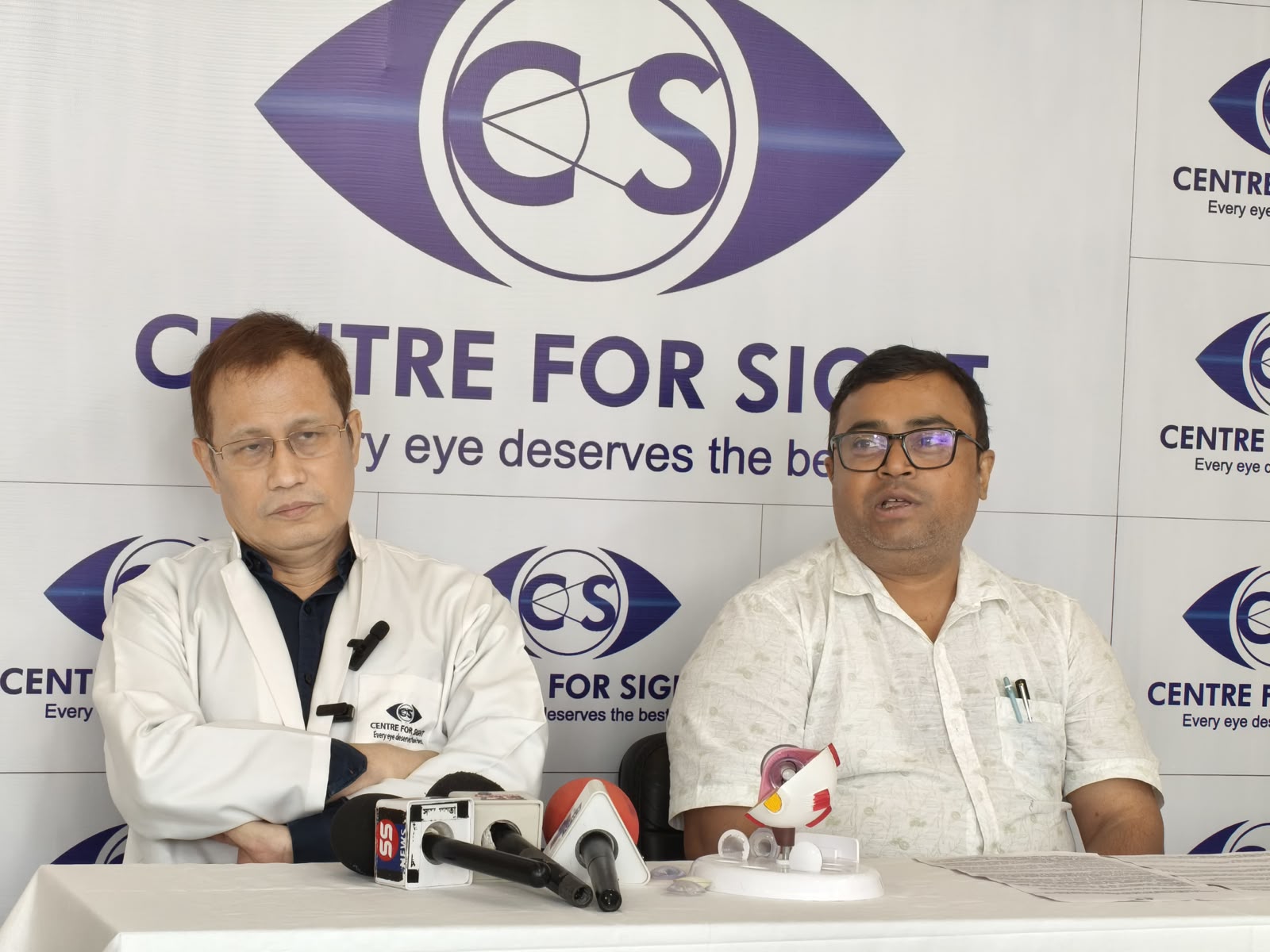
Spectacle power and cataracts are the most commonly known eye problems. However, glaucoma continues to damage eyesight largely unnoticed because of a lack of awareness. By the time it is detected due to irregular eye checkups, irreversible damage to the optic nerve has often already occurred. This warning was highlighted by experienced ophthalmologist Dr. Sanjay Kumar Buragohain.
Speaking at an eye care awareness discussion organized at Centre for Sight, Guwahati, Dr. Buragohain and ophthalmologist Dr. Kishore Pal pointed out that today, from children to office workers, people spend a significant portion of their day looking at mobile phone or computer screens. This excessive screen exposure is adversely affecting eye health. They also warned against the growing practice of purchasing and using eye drops without medical advice.
According to them, symptoms such as blurred vision, eye pain, or headaches should prompt an immediate consultation with an eye specialist. The risk of developing glaucoma increases significantly after the age of 40, especially among individuals with diabetes, high blood pressure, or a family history of the disease. Although damage caused to the optic nerve by glaucoma cannot be reversed, timely treatment can help prevent further deterioration.
With extensive experience in both medical and surgical ophthalmology, Dr. Buragohain has particular expertise in glaucoma, neuro-ophthalmology, and cataract treatment. He explained that glaucoma is an eye disease that gradually damages the optic nerve and, if not diagnosed and treated in time, may lead to permanent vision loss.
A comprehensive glaucoma evaluation may include measurement of intraocular pressure, gonioscopy, corneal thickness assessment (pachymetry), optic nerve examination, visual field testing (perimetry), and Optical Coherence Tomography (OCT) to assess the optic nerve and retinal nerve fiber layer. These tests help determine the type and stage of glaucoma, monitor disease progression, and guide appropriate treatment decisions.
Depending on the type and severity of the disease, glaucoma treatment may involve pressure-lowering eye medications, laser procedures, or surgery. Surgical options may include Minimally Invasive Glaucoma Surgery (MIGS), trabeculectomy, and glaucoma drainage devices or valves. In selected patients, Laser Peripheral Iridotomy may also be considered.
Dr. Mahipal S. Sachdev, Chairman and Medical Director of Centre for Sight, stated, “Several eye diseases, especially glaucoma, can progress without noticeable symptoms in their early stages. Therefore, regular eye examinations, appropriate diagnostic testing, and timely treatment are extremely important. Dr. Buragohain’s expertise in glaucoma, neuro-ophthalmology, and comprehensive eye care will further strengthen medical services for patients in Guwahati and across the Northeast.”
Dr. Buragohain also shared important eye care advice. He recommended that people working continuously on computers should follow the 20-20-20 rule: every 20 minutes, rest the eyes for 20 seconds by looking at an object at least 20 feet away. During the discussion, the specialists also raised awareness about lazy eye (amblyopia), elevated eye pressure, LASIK surgery, and various aspects of cataract surgery.
Speaking about joining Centre for Sight, Dr. Sanjay Kumar Buragohain said, “I am delighted to be part of the Centre for Sight team and to have the opportunity to contribute my experience in glaucoma, neuro-ophthalmology, cataract treatment, and comprehensive eye care for patients in Guwahati and the Northeastern region.”
In addition to glaucoma, neuro-ophthalmology, and cataract care, Centre for Sight Guwahati also provides services in retina care, corneal diseases, refractive error correction and vision enhancement, pediatric ophthalmology, squint treatment, and other medical and surgical eye care specialties. The center is equipped with a range of diagnostic and treatment facilities to address patients’ eye care needs at every stage.