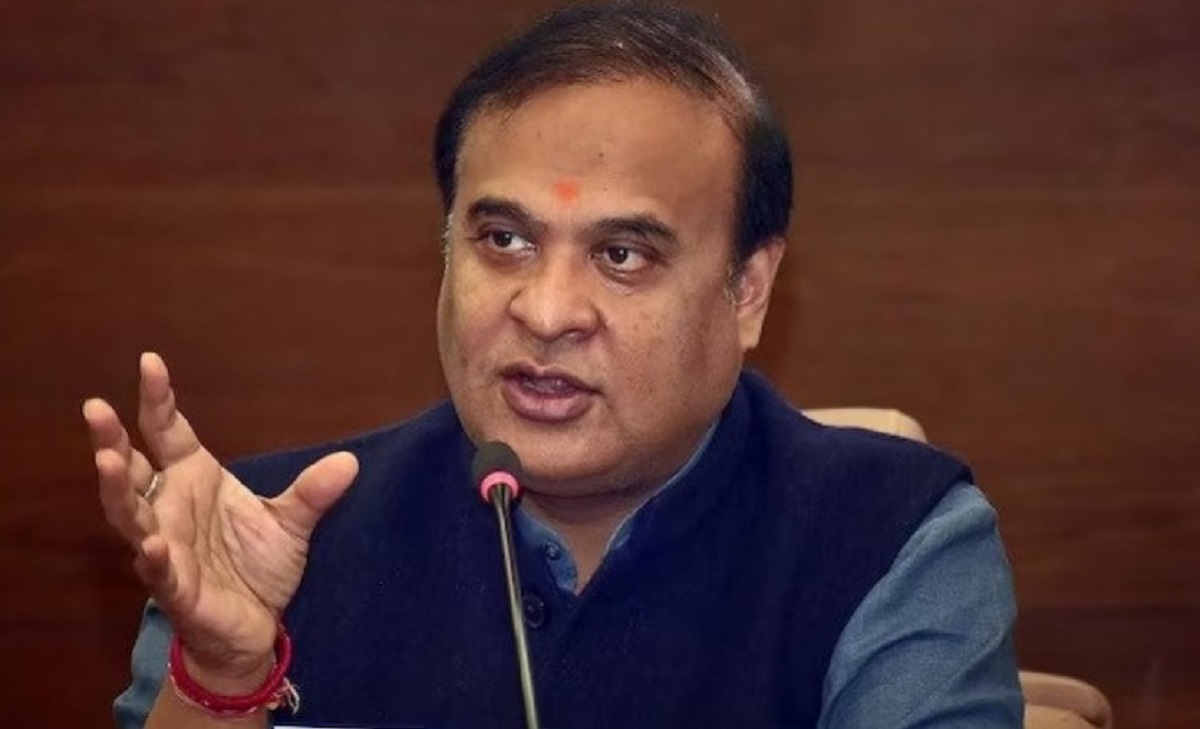
Assam Chief Minister Himanta Biswa Sarma continues to face mounting criticism over his recent remarks suggesting that if a “local revolutionary” were to be depicted on murals in Guwahati, ULFA (Independent) commander-in-chief Paresh Baruah could be considered instead of Cuban revolutionary Che Guevara.
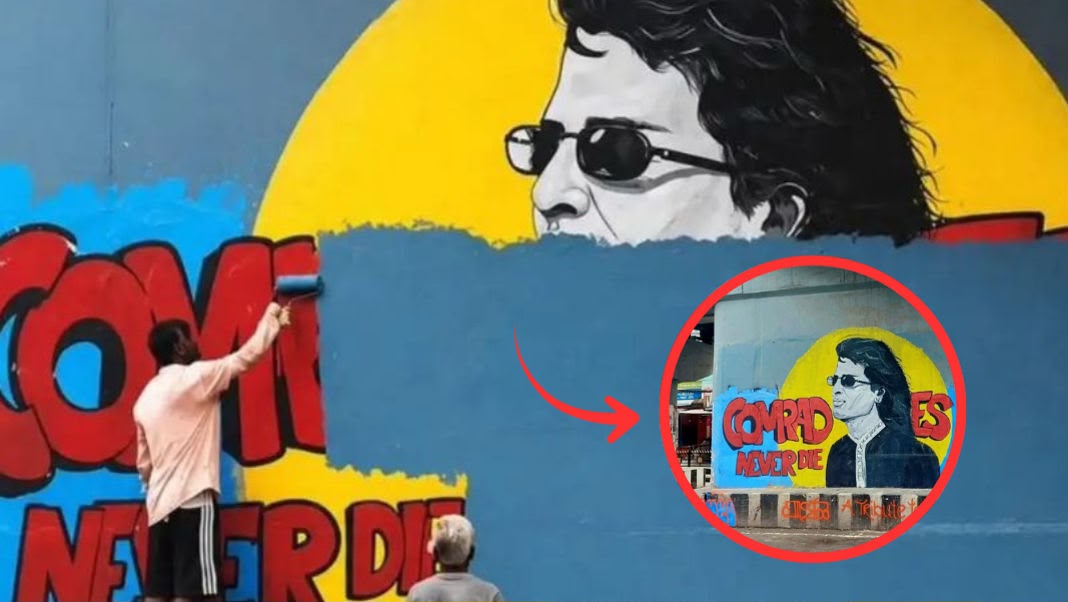
The remark, made during a recent press conference on the controversy surrounding a mural of singer Zubeen Garg beneath a Guwahati flyover, has sparked a political and legal debate across Assam.
The Chief Minister later clarified that his statement had been misinterpreted. He said the government has a “zero tolerance” policy against ULFA (I) and asserted that anyone painting a mural of Paresh Baruah would face legal action. However, the clarification has failed to quell the controversy.
On Saturday, Assam Mahila Congress president Meera Borthakur Goswami strongly criticised the Chief Minister, alleging that his statement could send a dangerous message to the state’s youth.
Speaking at a Congress organisational meeting in Jorhat, Goswami said it was “unfortunate” that a constitutional functionary had publicly referred to the leader of a banned organisation in such a context. She questioned who would take responsibility if young people were influenced by such remarks.
She also accused the Chief Minister of creating unnecessary provocation instead of addressing public concerns and alleged that his comments contradicted the state’s strict legal approach towards those accused of supporting banned organisations.
Meanwhile, the National Youth Wing of Raijor Dal lodged an FIR at Dispur Police Station, seeking legal action against the Chief Minister.
In the complaint, the organisation argued that a person who has taken an oath to uphold the Constitution should not make remarks that could be interpreted as encouraging the public to glorify the leader of a banned outfit. The youth wing maintained that the law should apply equally to everyone and questioned whether the same standards used against ordinary citizens would be applied in this case.
The controversy also drew a sharp response from the Students’ Federation of India (SFI), Assam State Committee, which accused the Chief Minister of undermining artistic freedom and democratic rights.
Addressing a press conference, SFI leaders alleged that the government’s remarks on murals and warnings of legal action against artists reflected an authoritarian mindset. They asserted that artists, writers and poets have a constitutional right to express themselves irrespective of political ideology.
The organisation defended the mural of singer Zubeen Garg and said artistic expression should not be dictated by the government. SFI also criticised the reported warning that painting murals or writing slogans on flyovers could invite stringent legal action, maintaining that public art forms part of democratic expression.
The student body further announced that it would continue its campaigns on issues relating to public education, government schools and universities, while also defending the freedom of artistic expression.
The controversy has also triggered legal discussions. Critics argue that ULFA (Independent) remains a banned organisation under the Unlawful Activities (Prevention) Act (UAPA), and any public statement that appears to glorify or encourage support for such an organisation could invite legal scrutiny.
Senior advocate Upamanyu Hazarika has argued that referring to Paresh Baruah as an alternative “revolutionary” effectively elevates the image of the chief of a banned insurgent group. According to him, statements perceived as supporting or encouraging a proscribed organisation may also fall within the ambit of the UAPA.
With political parties, student organisations and legal experts weighing in, the controversy surrounding the Chief Minister’s remarks continues to intensify across Assam.